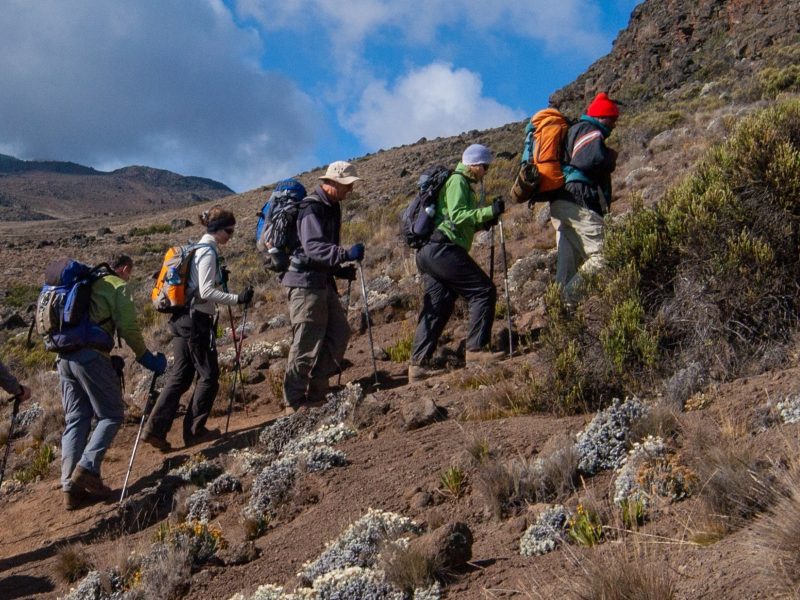
Preparing for a Mount Kilimanjaro climb requires careful planning, especially when deciding what to take with you. A good Kilimanjaro packing list should include suitable clothing, footwear, trekking equipment, personal items, hydration supplies, health essentials, and important travel documents.
Mount Kilimanjaro passes through several climate zones, so temperatures and weather conditions can change considerably as you gain altitude. Packing clothing in layers allows you to adjust to changing conditions throughout your trek.
This Mount Kilimanjaro packing list provides a practical guide to the essential items to consider before beginning your journey to Uhuru Peak.
Clothing is one of the most important parts of your Kilimanjaro packing list. You can experience warm conditions at lower elevations and very cold conditions near the summit, so a suitable layering system is essential.
Base layers help manage moisture and keep you comfortable while trekking.
Consider packing:
Moisture-wicking long-sleeve tops
Moisture-wicking thermal bottoms
Comfortable trekking underwear
Lightweight hiking shirts
Extra base-layer clothing
Avoid relying heavily on cotton as a base layer because it can retain moisture and become uncomfortable when temperatures fall.
Insulating layers help retain body heat as temperatures become colder at higher elevations.
Consider including:
Fleece jacket
Warm insulated jacket
Lightweight down or synthetic jacket
Warm mid-layer
Extra warm clothing for the summit
Weather on Mount Kilimanjaro can change quickly. Waterproof clothing helps protect you from rain and wind.
Pack:
Waterproof jacket
Waterproof trousers
Windproof outer layer
Lightweight rain protection
Suitable footwear is essential for comfort, stability, and protection during a Kilimanjaro trek.
Choose sturdy hiking boots that fit comfortably and provide suitable support.
Your boots should:
Be comfortable and properly broken in
Provide suitable ankle support
Have good traction
Be appropriate for rocky and wet trails
Fit comfortably with your trekking socks
Avoid starting your climb with completely new, untested boots.
Pack several pairs of comfortable trekking socks.
Useful options include:
Moisture-wicking hiking socks
Warm thermal socks
Extra pairs for wet conditions
Socks suitable for your hiking boots
Different sections of the mountain require protection from sunlight, wind, and cold temperatures.
Include:
Sun hat
Warm beanie
Balaclava or neck gaiter
Buff or scarf
Pack gloves suitable for different temperatures.
Consider:
Lightweight trekking gloves
Warm insulated gloves
Waterproof or windproof outer gloves
A practical backpack is another important part of your Kilimanjaro packing list.
A comfortable daypack can hold the items you need during daily trekking.
Useful items include:
Water
Snacks
Rain jacket
Camera
Sunscreen
Personal documents
Personal medication
Small personal items
Depending on your trekking arrangements, a larger duffel bag can be useful for storing clothing and equipment that you do not need to access constantly during the day.
Use waterproof protection or dry bags to help protect important items from rain and moisture.
Many Kilimanjaro routes involve camping, making suitable sleeping equipment an important consideration.
Choose a sleeping bag suitable for the cold temperatures you may encounter at higher elevations.
Consider:
Appropriate temperature rating
Comfort
Weight
Packability
Personal sleeping preferences
A sleeping bag liner can provide additional warmth and help keep your sleeping bag clean.
A suitable sleeping pad provides insulation from the ground and can improve sleeping comfort during your trek.
The right trekking equipment can make your journey more comfortable and manageable.
Trekking poles can provide additional stability on steep, rocky, or uneven sections of the trail.
They can also help reduce strain during descents.
A headlamp is important for early-morning starts and moving around camp after dark.
Pack:
Reliable headlamp
Extra batteries
Spare batteries stored safely
High-altitude sunlight can be intense, so good-quality sunglasses with appropriate UV protection are useful.
Maintaining appropriate hydration and energy during a long trek is important.
Carry suitable reusable water bottles or a hydration system.
Consider:
Durable water bottles
Hydration bladder
Insulated bottle for colder conditions
Water treatment supplies if recommended by your trekking operator
Follow your guide’s advice regarding hydration throughout the trek.
High-energy snacks can provide convenient energy during trekking.
Consider packing:
Nuts
Dried fruits
Energy bars
Crackers
Chocolate
Other familiar high-energy snacks
Choose foods that you already know you tolerate well during physical activity.
Health and personal-care items should also be included in your Kilimanjaro trekking packing list.
Consider bringing:
Personal prescription medication
Basic first-aid supplies
Blister protection
Personal hygiene products
Any medication recommended by your healthcare professional
If you have concerns about high-altitude travel, discuss appropriate preparation with a qualified healthcare professional before your trip.
Sun exposure can be strong at high altitude.
Pack:
High-SPF sunscreen
Lip balm with sun protection
Sunglasses
Sun hat
Useful personal-care items include:
Toothbrush
Toothpaste
Biodegradable soap where appropriate
Wet wipes
Hand sanitizer
Small quick-drying towel
Toilet paper or tissues
Pack personal-care products in waterproof bags where possible.
Keeping your important documents secure is essential when traveling to Tanzania.
Bring:
Valid passport
Visa or relevant entry documentation
Travel insurance information
Flight information
Emergency contact details
Trekking and accommodation information
Copies of important documents
Keep digital copies of important documents securely available as a backup.
You do not need to carry many electronic devices, but a few can be useful during your journey.
Consider bringing:
Mobile phone
Camera
Extra memory cards
Power bank
Charging cables
Appropriate travel adapter
Spare batteries where required
Protect electronics from rain, dust, and cold conditions.
Several small items can make your trek more comfortable.
Consider adding:
Backpack rain cover
Waterproof bags
Trekking towel
Reusable water bottle
Earplugs
Small notebook and pen
Camera
Extra storage bags
Personal comfort items
Avoid overpacking because every unnecessary item adds weight to your journey.
Knowing what not to pack is also useful when preparing your Kilimanjaro packing list.
Avoid bringing unnecessary heavy items, excessive clothing, or equipment that you are unlikely to use.
Before your trek, check with your tour operator about equipment that may already be provided. This can prevent you from carrying duplicate equipment.
Use this checklist before leaving for your trek.
Passport and travel documents
Travel insurance information
Hiking boots
Trekking socks
Base layers
Warm layers
Waterproof jacket
Waterproof trousers
Hiking trousers
Trekking shirts
Warm hat
Sun hat
Gloves
Sunglasses
Sunscreen
Backpack
Duffel bag
Sleeping bag
Sleeping pad
Trekking poles
Headlamp
Extra batteries
Water bottles or hydration system
Snacks
Personal medication
Basic first-aid supplies
Toiletries
Wet wipes
Hand sanitizer
Mobile phone
Camera
Power bank
Charging cables
Waterproof storage bags
When organizing your Mount Kilimanjaro packing list, place frequently used items where they are easy to reach.
Keep your rain jacket, water, snacks, sunscreen, and other frequently needed items accessible in your daypack.
Less frequently used items can be stored deeper inside your main luggage or duffel bag.
Use waterproof bags to separate clothing and protect important equipment from rain and moisture.
Organize your equipment into categories so you can quickly find what you need.
For example, keep clothing together, personal-care items in a separate waterproof bag, and important documents in a secure location.
Before departure, test your backpack and make sure you are comfortable carrying the essential items you will need during the trek.
Pack according to the expected weather, route, and duration of your trek. Mount Kilimanjaro’s climate changes significantly with altitude, so clothing layers are generally more practical than relying on a single heavy item.
Break in your hiking boots before the trek, test your backpack, and check that all important equipment is working properly.
It is also important to confirm current equipment requirements with your trekking operator because included equipment and packing requirements can vary between routes and operators.
Before traveling to Tanzania, check your passport, travel documents, insurance information, trekking arrangements, equipment, clothing, and personal supplies.
A final review of your Kilimanjaro packing list can help you identify missing items before your journey begins.
A well-prepared Kilimanjaro packing list can make your trek more comfortable and help you stay prepared for changing weather conditions.
The most important items include suitable layered clothing, comfortable hiking boots, warm clothing, waterproof protection, trekking equipment, hydration supplies, personal-care items, travel documents, and health essentials.
Before beginning your Mount Kilimanjaro adventure, review your packing checklist carefully and avoid unnecessary weight. With proper preparation and suitable equipment, you can focus on enjoying the mountain scenery, experiencing Tanzania’s natural environment, and making the most of your journey toward Uhuru Peak.
If you are planning a Kilimanjaro adventure, also explore our guides on the best time to climb Mount Kilimanjaro and how to prepare for the climb for additional planning information.

Don’t wait contact us now and hear back from our safari experts within 24 hours.
WhatsApp us